
Black Tie Works in the Midwest, If You Mean It
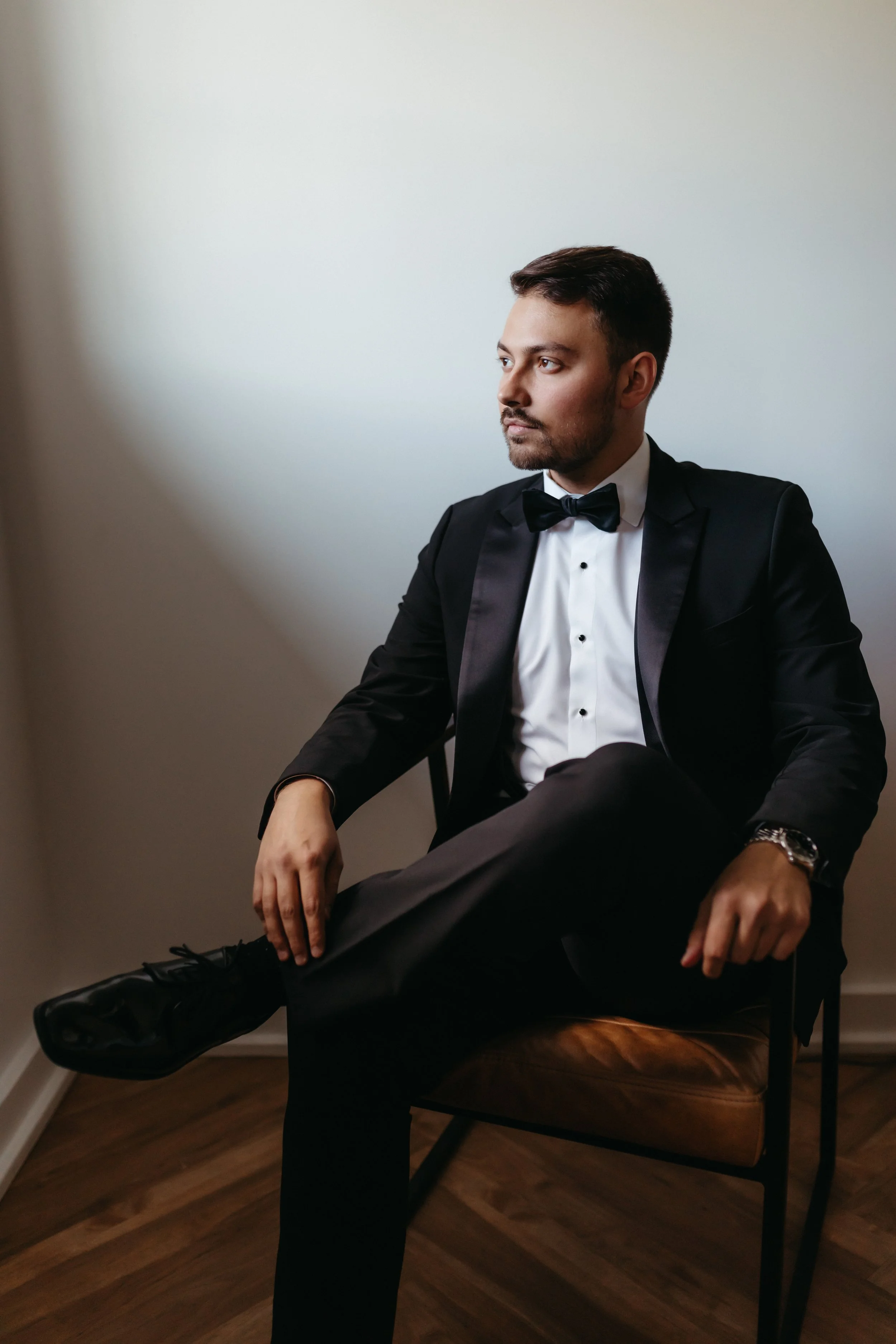
Most Midwest black tie weddings aren't actually black tie.
The couple writes it on the invitation. The guests show up in regular suits anyway. The ceremony starts at 4 p.m. in full daylight. Dinner is buffet, or family-style, or stations. The dance floor opens at 7:00. The evening reads as a regular wedding in slightly nicer clothes, and the couple later wonders why it didn't feel the way they thought it would.
That's not black tie. That's aspirational dress code.
Black tie isn't a dress code. It's architecture.
A dress code is something you write on an invitation. Architecture is something you build, and everything that comes after has to sit on top of it.
Black tie is the second. The dress code is the visible expression of a larger structural commitment. The timing, the dinner style, the pacing, the environment, and the discipline of holding all of it together across a long evening. When the underlying structure is there, the dress code lands. When it isn't, the clothes can feel like a costume the guests are wearing to a wedding that didn't quite become what it was dressed up to be.
This is why most Midwest black tie weddings don't land the way couples hope they will. The formality has to be in the foundation, not the finish.
What the architecture actually requires
Here's what black tie asks of you.
Timing. A black tie wedding doesn't start at 4 p.m. The ceremony begins at 5 p.m. at the earliest, more typically even later. The cocktail hour and dinner move into evening light. There's a reason black tie is associated with evening. Formality fights against full daylight, and a ceremony in afternoon sun reads as casual no matter what the guests are wearing. The light has to match the dress code, or one of them loses.
Dinner style. Plated. Multi-course. Served. The pacing of a plated dinner is itself part of what makes the evening feel formal. Guests sit, the first course is set down, conversation happens, the next course arrives, toasts unfold between courses. Buffets and stations rush the evening and break the rhythm. They also signal something about the relationship between host and guest. A plated dinner says you're being served. A buffet says you're serving yourself. Black tie is about the first.
Pacing. The whole evening moves more slowly than a typical wedding. The dance floor doesn't open at 7 p.m. Dinner takes its time. Toasts happen at the table, between courses, not as a separate block before the dancing starts. The cocktail hour is genuinely an hour, not a transitional thirty minutes while the photographer wraps up. Everything is given the time it needs to feel substantial. A rushed black tie wedding is a contradiction in terms.
Environment. The space has to hold the formality. Open-air barns and fire pits are great for the kind of wedding they're built for, but they work against black tie because they read as casual no matter what's happening around them. A black tie wedding needs an environment with architectural intentionality. Materials, scale, lighting, proportion that meet the formality of the evening rather than fighting it. The space is not a backdrop. It's part of the structure. At Cliffside, black tie weddings almost always choose our Premier Package for this reason.
Discipline. This is the hardest part. The temptation throughout planning is to add the fun element in the wrong place. The costume change for the reception, the casual after-party that competes with the formality, the coloring table for the kids, the photo booth with props placed in the middle of the evening. Each one softens the formality during the hours that need to hold it, and across the night, the structure can quietly come apart.
There's a difference between dilution and a well-placed counterpoint. A late-night burger bar at 10:30 p.m., after the formal dinner has done its work, is part of the tradition. The formality loosening just enough at the very end to feel human. A burger bar at 7 p.m. instead of plated dinner is the opposite. The architecture holds when casual elements arrive at the right moment, on the right side of the night's center of gravity. Discipline isn't about saying no to everything fun. It's about knowing when.
The structure that holds
A black tie timeline that earns the dress code looks something like this:
5:00 PM. Guest arrival. Welcome drinks or a brief pre-ceremony mingle.
5:30 PM. Ceremony. The main event begins, followed immediately by cocktail hour.
6:00 PM. Cocktail hour. Passed hors d'oeuvres, top-shelf open bar, live music.
7:00 PM. Reception and dinner. Multi-course plated dinner and dancing.
The shape of the evening matters as much as any individual element. The ceremony moves into evening light. Cocktail hour is a full hour, not a transitional moment. Dinner begins at 7 p.m. and unfolds across the rest of the night. Dancing follows the meal rather than competing with it. This is what black tie looks like when the architecture is doing its job.
The unspoken contract with your guests
When you write black tie on an invitation, you're asking your guests to do something. To buy or rent a tuxedo, find a gown, plan their evening around the formality. Most guests will do it gladly when they understand it's part of something. The contract works in both directions. They show up dressed for the evening you've described, and the evening rises to meet them.
This is the part most couples don't think about. The contract obligates you to hold up your end by making the evening worthy of the effort you've asked them to make. A guest in a tuxedo at a 4 p.m. ceremony followed by a buffet feels the gap, even if they never say so.
If the structure isn't going to be there, there are gentler options on the invitation. Semi-formal. Cocktail attire. Garden formal. Black tie optional. Or something more particular to your day. Couples have written things like "English Countryside Attire" or "Candlelight Formal" A creative, honest dress code asks something specific of your guests and matches what they'll actually experience. That's a better gift to them than aspirational formality the evening doesn't deliver on.
Why most weddings shouldn't be black tie
A relaxed, joyful, sundress-and-sportcoat wedding is a beautiful thing. The best wedding most couples will ever attend isn't a black tie wedding. It's a wedding that fits the couple, the season, the place, and the energy they want in the room. Most couples shouldn't do black tie, and that's not a criticism. It's an honest read of what most weddings are actually built around.
But if the formality is what you want, if the architecture of a long, slow, elegant evening is what's in your imagination when you picture your wedding day, commit to it. Plan the structure first. Choose the venue that can hold it. Build the evening around plated dinner, evening light, paced toasts, and the discipline to protect the formality from the small dilutions that will tempt you throughout planning.
Black tie works in the Midwest. It works at Cliffside. It works anywhere.
But it only works when you mean it.